
Coral Care content is reviewed and approved by our clinical professionals so you you know you're getting verified advice.

Our free screener offers guidance and connects you with the right providers to support your child's journey.
Massachusetts is packed with world-class museums and coastline, and more of it is open to your family than you might think. From Boston to Acton to the North Shore, institutions across the state now run dedicated sensory-friendly hours, lend sensory bags, and set aside quiet spaces. Here is where to go and how to plan each visit.
Museums with sensory-friendly programs
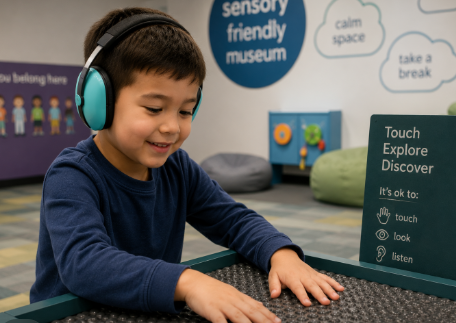
Boston Children's Museum runs its Morningstar Access program, which lets children with special or medical needs explore the museum before it opens, with a cap of about 100 guests to keep crowds and noise low. Pre-registration is required, admission is discounted, and there is a social story to read beforehand, plus adaptive tools and sensory resources on hand.
Discovery Museum (Acton) hosts free "Especially for Me" afternoons and evenings each month. Afternoon events stay open to the public but avoid scheduling group visits to keep things calm, while evening events close to the public and focus on specific needs like autism, low vision, or hearing. A social story is available in eight languages, and there is a designated Take a Break space. No medical diagnosis is required.
Museum of Fine Arts (Boston) offers several programs, including Beyond the Spectrum for kids and teens with autism, sensory-friendly MFA Playdates on Mondays, and customizable Artful Adventures gallery tours paired with an art activity.
Museum of Science (Boston) runs Planetarium shows designed for children and adults with special needs, with looser house rules so you can move around and talk quietly.
Aquariums, zoos, and the outdoors
New England Aquarium offers Sensory Inclusive Access hours when the aquarium is closed to the public, and lends sensory bags with fidget items and noise-canceling headphones.
For the outdoors, the Massachusetts DCR Universal Access Program runs adaptive kayaking, cycling, and other activities across state parks throughout the warmer months, with equipment and trained partners. It is one of the most underused resources in the state.
Theaters and cultural venues
- Peabody Essex Museum (Salem) is a certified sensory-inclusive venue welcoming visitors with a range of sensory needs.
- USS Constitution Museum (Charlestown) holds Sensory-Friendly Sundays on the second Sunday of the month from late fall through early spring, with a quieter setting before public hours.
- LEGOLAND Discovery Center (Somerville) offers Sensory Friendly Sundays with softer lighting, reduced capacity, and quieter play areas.
- Children's Museum at Holyoke runs Sensory Sundays with a calmer main space and a guided sensory obstacle course for sensory seekers.
- AMC Sensory Friendly Films screen on the second and fourth Saturday of the month at locations like Burlington and Framingham, with the lights up and the sound down.
A statewide resource worth bookmarking
For an ongoing calendar of sensory-friendly events, adaptive recreation, and camps across the state, SPED Child and Teen (spedchildmass.com) keeps one of the most complete listings in Massachusetts. It is a good habit to check it at the start of each season.
Where week-to-week support comes in
These outings open up your family's world, and the steady progress your child makes usually happens in the consistent work between them. That is where a lot of Massachusetts families feel stretched, especially when clinic appointments mean fighting traffic on top of everything else.
Coral Care connects Massachusetts families with licensed occupational therapists, speech-language pathologists, and physical therapists who come to you and work with your child in your living room, on your schedule. If you have been thinking about starting speech therapy, OT, or PT, or you are not sure which your child needs, you can see who is available near you.
For programs that work anywhere, from the free national parks pass to theme park access cards, see our national disability resources guide, and if a trip is coming up, our guide to traveling with a child with disabilities covers airport and airline support.
Frequently Asked Questions
Coral Care matches Massachusetts families with licensed occupational, speech, and physical therapists who come to your home and work with your child there. It removes the drive to a clinic and lets sessions happen where your child is most comfortable, on a schedule that fits your family.
SPED Child and Teen (spedchildmass.com) maintains one of the most complete Massachusetts listings of sensory-friendly events, adaptive recreation, and camps. Checking it at the start of each season is a good way to plan ahead.
The Massachusetts DCR Universal Access Program runs adaptive kayaking, cycling, and other activities across state parks with trained partners and adaptive equipment during the warmer months. Certified sensory-inclusive venues and accessible playgrounds around the state are also good options for calmer outdoor time.
Usually not. Discovery Museum, for example, states that any family who would benefit is welcome and no diagnosis is required. A few programs that involve theme park accessibility cards ask for documentation of your child's needs, which you can prepare through your pediatrician or therapist.
Yes. Discovery Museum's Especially for Me events are free with pre-registration and do not require a medical diagnosis. The Massachusetts DCR Universal Access Program also offers free and low-cost adaptive outdoor activities across state parks, and many library and community sensory storytimes are free.
Boston Children's Museum (Morningstar Access), Discovery Museum in Acton (Especially for Me events), the Museum of Fine Arts (Beyond the Spectrum and MFA Playdates), and the Museum of Science (sensory-friendly Planetarium shows) all run strong programs. The Peabody Essex Museum in Salem is a certified sensory-inclusive venue. Most special events require pre-registration.