Coral Care content is reviewed and approved by our clinical professionals so you you know you're getting verified advice.

Our free screener offers guidance and connects you with the right providers to support your child's journey.
Why Does My Child Hate Brushing Teeth, Baths, or Haircuts, and What Helps?
Short answer: pushing back on hygiene is very common, especially for toddlers and preschoolers. For some kids, it's about wanting control. For others, these routines simply feel like a lot: the taste and foam of toothpaste, water on the face, the buzz of clippers, or the feeling of a brush on the scalp. Small changes, like predictable routines, giving your child a role, and adjusting the tools, often make a big difference. If hygiene is a daily struggle that isn't getting easier, a pediatric occupational therapist can help your child feel more comfortable, one small step at a time.
Coral Care sends licensed pediatric occupational therapists to families' homes in Connecticut, Illinois, Massachusetts, New Hampshire, New Jersey, Pennsylvania, Rhode Island, Texas, and Virginia, so your child can practice in your own bathroom with their own toothbrush and tub. No referral is needed, and most families book an evaluation within 1 to 2 weeks.
What's Typical?
Every child develops at their own pace. Our toddler milestones guide notes that by age 3, many children wash and dry their hands, and growing independence (and some defiance) is a normal part of the toddler years. Kids still need a lot of help with the rest of their hygiene routine for years after that. The American Academy of Pediatrics notes that children usually need help with brushing until they are 8 years old (AAP). For more on when self-care skills usually come in, see our self-care skills by age guide.
Why Hygiene Can Feel Hard for Some Kids
- Touch. Toothbrush bristles, a washcloth, a towel, or a comb can feel scratchy or uncomfortable.
- Taste and texture. Toothpaste flavor and foam can be a lot for some kids.
- Water and temperature. Water on the face or head, or a bath that feels too warm or too cool, can be upsetting.
- Sound. Running water, a hair dryer, or clippers can feel loud.
- Body position. Tipping the head back to rinse hair can feel unsteady.
- Not knowing what comes next. Hygiene routines have a lot of steps, and surprises can make them harder.
Tips for Tooth Brushing
The AAP recommends brushing twice a day, usually after breakfast and before bedtime, and suggests ways to make it easier (AAP):
- Let your child pick their favorite flavor of fluoride toothpaste.
- Brush along to a favorite song, or take turns and let them brush your teeth.
- For infants and toddlers, lying down for brushing is often easiest.
- Choose a toothbrush with soft bristles, a small head, and a thick handle that's easy to grip.
A few more ideas that often help:
- Let your child brush first, then you take a turn to finish.
- Try a mirror so they can see what's happening.
- Count the teeth or the strokes so they know when it will end.
- Ask your child's dentist about toothpaste and brush options if taste or texture is the sticking point.
Tips for Bath Time and Hair Washing
- Keep it predictable. Same order every night, and tell your child what's coming next.
- Let them check the water. Have your child feel the water first, and adjust the temperature together.
- Protect the face. A washcloth to hold over their eyes, a visor, or pouring water from a cup they control can make rinsing easier.
- Support their body. Rinsing while sitting up or leaning forward can feel steadier than tipping back.
- Give them a job. Let them wash their own arms or squeeze the shampoo.
- Wrap up warm. Have a towel ready so the cold moment after the bath is short.
Tips for Haircuts and Hair Brushing
- Practice at home first. Pretend to give a stuffed animal a haircut, or let your child sit in the chair and touch the tools.
- Choose the time. Book a quiet time of day, and ask for a stylist who works with young kids.
- Offer choices. Scissors instead of clippers, a cape or no cape, sitting on your lap.
- Bring comfort. A favorite toy, a show to watch, or headphones can help.
- Brush gently. A detangling spray and a wide-tooth comb, starting from the ends, can make brushing more comfortable.
For more ideas, see our sensory tools and products that pediatric OTs recommend.
How In-Home OT Helps
An occupational therapist figures out what makes a routine hard for your child, then helps them build comfort and skills step by step. At home, that can look like:
- Practicing in your real bathroom with your child's own toothbrush, tub, and towels.
- Building comfort gradually through play, so tolerating the toothbrush or a little water on the face feels manageable.
- Building the motor skills for brushing, washing, and drying, like grip and coordination.
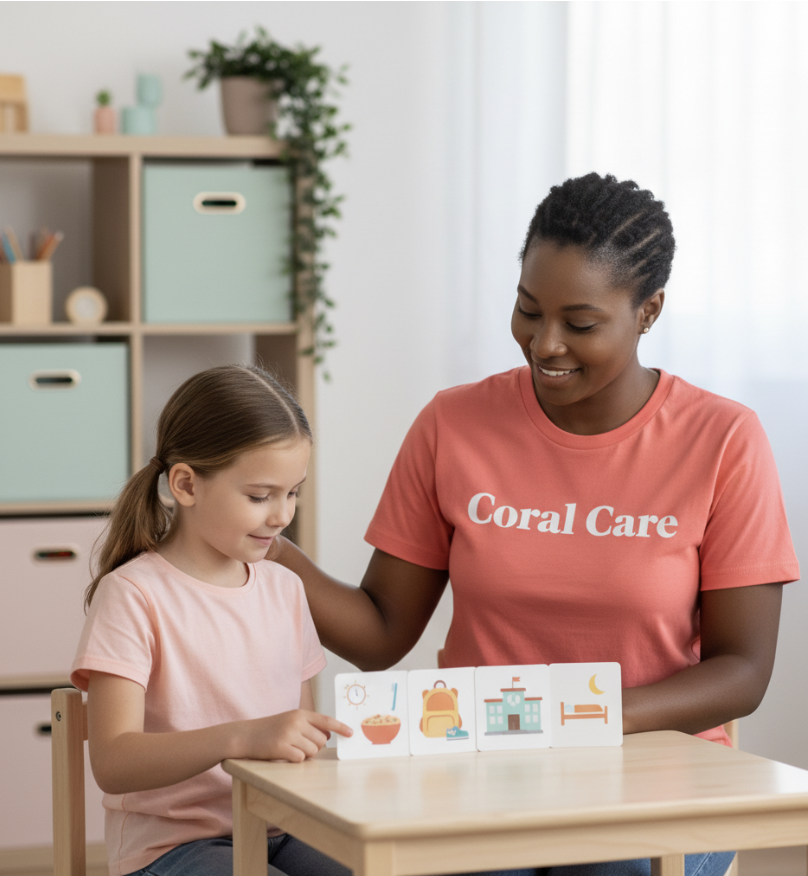
- Making routines predictable with picture schedules and consistent words.
- Coaching you on strategies that fit your family's routine.
Learn more about how at-home pediatric OT works.
When Is It a Good Time to Check In?
It can be a good time to talk with your pediatrician or an occupational therapist if:
- Hygiene routines lead to big upsets most days, and it isn't getting easier
- Your child is uncomfortable with many textures, sounds, or kinds of touch, not just one routine
- Brushing is so hard that your child's teeth aren't getting cleaned (your dentist can help too)
- Your child also has a hard time with other self-care, like dressing or eating
It can also help to know the difference between a tantrum and feeling overwhelmed. Read tantrum or sensory meltdown: how to tell the difference, the signs your child might need occupational therapy, or take our free screener.
How to Get Started
- Under 3: your state's Early Intervention program offers free evaluations, and you don't need a referral to call. Find your state's program.
- Private in-home OT: Coral Care can evaluate your child at home, often sooner than programs with waitlists. No referral is needed.
Many insurance plans cover pediatric occupational therapy when it's medically necessary, including therapy at home. If you're paying out of pocket, Coral Care's self-pay rate is $250 for an evaluation and $125 per session, and FSA and HSA funds can be used. See the plans we accept by state.
Related Reading
- Toddler milestones: what to expect from 2 to 3 years
- Self-care skills by age: when kids learn to dress, feed, and care for themselves
- Tantrum or sensory meltdown? How to tell the difference
- Sensory tools and products that actually help
- How at-home pediatric occupational therapy works
- Pediatric occupational therapy at Coral Care
Frequently Asked Questions
Yes. An occupational therapist can help your child feel more comfortable with hygiene routines step by step, build the motor skills for brushing and washing, and make routines more predictable. With in-home OT, practice happens in your own bathroom, and your therapist coaches you on strategies that fit your family.
Practice at home first, like pretending to cut a stuffed animal's hair. Book a quiet time of day, ask for a stylist who works with young kids, and offer choices, like scissors instead of clippers or sitting on your lap. A favorite toy, a show, or headphones can help too.
Keep the routine predictable, let your child check the water temperature, and give them a way to protect their face, like holding a washcloth over their eyes or pouring water from a cup they control. Rinsing while sitting up or leaning forward can feel steadier than tipping back.
It's very common. Toddlers want control, and some find the taste, foam, or feel of the brush uncomfortable. Letting your child pick a toothpaste flavor, brushing to a song, taking turns, and keeping the routine the same each time often help. Children usually need help with brushing until around age 8, so it's okay to stay involved.