
Coral Care content is reviewed and approved by our clinical professionals so you you know you're getting verified advice.

Our free screener offers guidance and connects you with the right providers to support your child's journey.
Help your child prepare for trick-or-treating with a free, illustrated social story and personalized Halloween Plan.
Halloween is one of those holidays that looks magical through a child's eyes. The costumes, the decorations, the excitement of collecting candy from neighbors. What's not to love?
Well, for some kids, quite a bit.
There's the costume that feels uncomfortable after five minutes. The doorbell that's unexpectedly loud. The neighbor wearing a mask. The house with flashing lights and spooky sound effects. And the moment when a grown-up says, "Go ahead! Say trick-or-treat!"
For children who experience sensory sensitivities, communication differences, anxiety, or difficulty with unfamiliar routines, Halloween can be a lot to process.
The good news? A little preparation can go a long way.
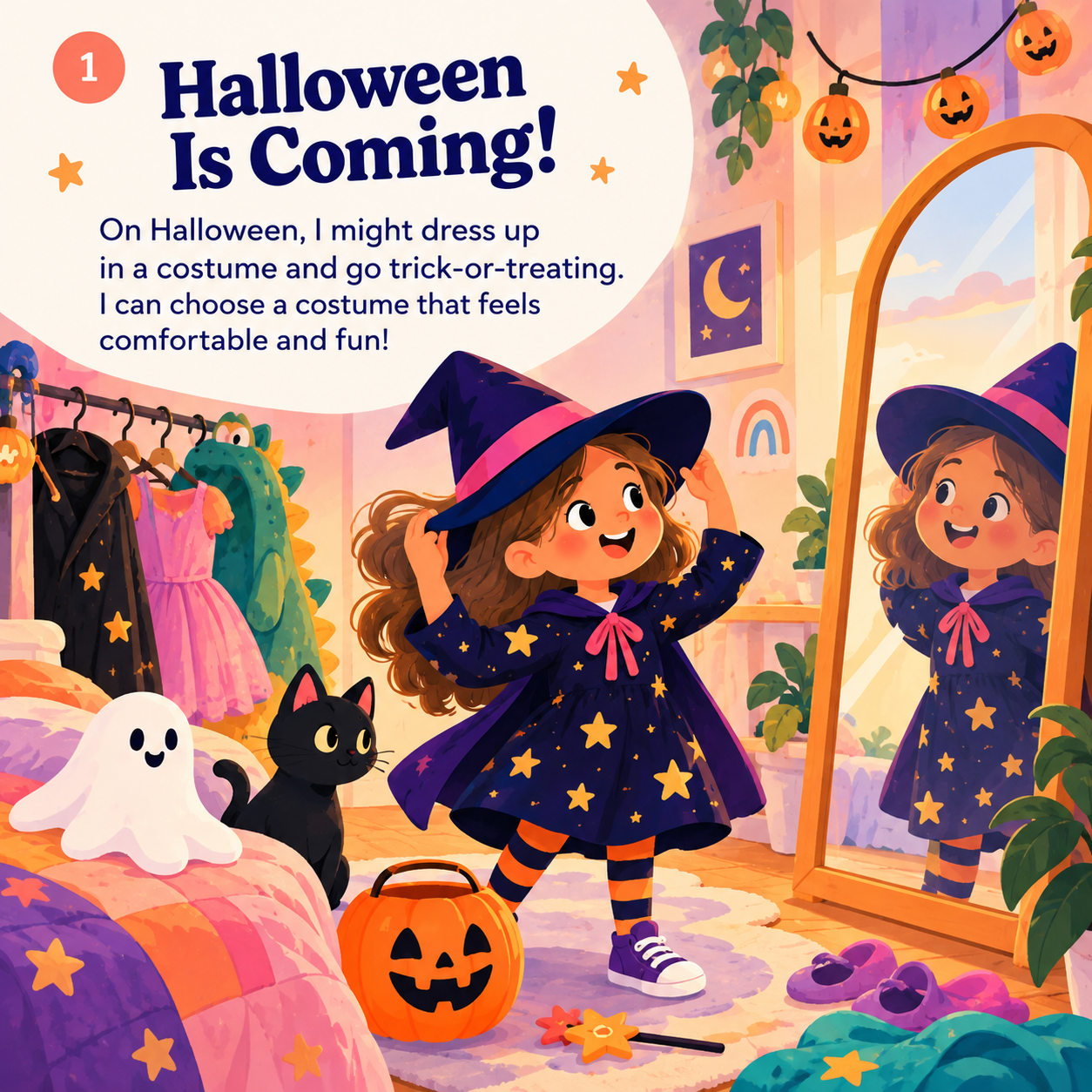
That's why we created My Halloween Story, a free printable social story to help children explore what trick-or-treating might look like before the big night arrives.
🎃 Download Your Free Halloween Social Story
A Halloween adventure they can explore before the big night.
My Halloween Story is a colorful, illustrated printable that walks children through common trick-or-treating experiences, from getting dressed in a costume to approaching a neighbor's door, communicating in their own way, and knowing when it's time for a break.
What's inside:
- A friendly, illustrated trick-or-treating story
- Simple, child-centered language about what to expect
- Different ways to communicate, including speaking, waving, using a talker, or asking a grown-up for help
- Reassurance about sensory surprises and taking breaks
- A personalized Halloween Plan your child can complete
- Helpful tips for parents and caregivers
Download your free printable Halloween story
Enter your email and we'll send My Halloween Story straight to your inbox.
Print it, read it together, and revisit it as often as your child likes.
Why Halloween Can Feel Overwhelming for Some Kids
Think about how many unfamiliar experiences are packed into one evening.
Sensory surprises
Flashing lights, fog machines, scratchy costumes, loud decorations, crowded sidewalks, and unexpected noises can all be uncomfortable or overwhelming.
Unfamiliar social interactions
Trick-or-treating involves approaching strangers, waiting at doors, and navigating expectations about what to say and do.
Changes in routine
Halloween happens at an unusual time of day, often involves excitement and anticipation, and doesn't follow the predictable rhythm of a typical evening.
Communication demands
Some children use AAC devices, gestures, or other forms of communication. Others may feel uncomfortable speaking to unfamiliar adults.
None of these experiences automatically means a child can't enjoy Halloween. It just means they may benefit from having more information, more choices, and a little extra support.
What Is a Social Story, and How Can It Help?
A social story is a short, personalized narrative that helps a child understand a situation, what might happen, and the choices available to them.
Instead of waiting until Halloween night to introduce every new experience, you can explore those moments together in a calm, familiar setting.
A story might show a child walking up to a house, ringing the doorbell, and waiting for someone to answer. It might explain that some decorations make noises, that different costumes can look surprising, or that it's okay to ask for a break.
The goal isn't to teach a child to tolerate something that feels overwhelming or to perform Halloween "correctly."
The goal is to help them feel informed, supported, and empowered to participate in a way that works for them.
5 Ways to Help Your Child Get Ready for Trick-or-Treating
1. Read a Halloween social story together
Start several days before Halloween, when your child is relaxed and interested.
Read the story together and pause to talk about the pictures. Let your child ask questions, point to things they recognize, or skip pages that don't feel relevant.
You don't need to quiz them afterward. This should feel like storytime, not homework.
2. Practice through play
Set up a pretend trick-or-treating experience at home.
Take turns being the neighbor and the trick-or-treater. Knock on a bedroom door, practice waiting, and pretend to hand out treats.
Stuffed animals can join in, too!
If your child uses a talker, you can model relevant messages during play, such as "trick-or-treat," "thank you," "all done," or "I need a break," without requiring them to use a particular phrase.
3. Make the costume comfortable
Try the costume on before Halloween night.
Can your child move freely? Does the fabric feel comfortable? Are there tags, seams, masks, or accessories that bother them?
It's completely fine to modify a costume, wear familiar clothes underneath, or skip certain accessories.
The best costume is one your child actually enjoys wearing.
4. Make a Halloween Plan together
One of the most helpful things you can do is give your child choices.
Who would they like to go trick-or-treating with? Would they prefer a few familiar houses or a longer neighborhood walk? What would help if things get loud?
Our free printable includes a personalized Halloween Plan so children can explore their preferences and identify helpful supports.
Some kids might choose headphones, a favorite comfort item, or a flashlight. Others might want to stay close to a parent or take breaks between houses.
There's no single right way to participate.
5. Let your child define success
It's easy to get caught up in what Halloween is supposed to look like.
But success might be putting on a costume and taking a photo. Visiting one neighbor. Waving instead of speaking. Watching trick-or-treaters from the front porch. Or deciding that the evening is finished after ten minutes.
Celebrate your child's participation, choices, and self-advocacy rather than the number of houses visited.
What If My Child Doesn't Want to Say "Trick-or-Treat"?
That's okay!
There are lots of ways to participate in Halloween, and spoken language isn't a requirement.
Your child might wave, smile, point, use their talker, or have a grown-up communicate for them.
You can even practice these options ahead of time, so your child knows they have choices.
Halloween should be about connection, play, and enjoyment, not pressure to communicate in a particular way.
Make This Halloween Their Own
Every child experiences Halloween differently.
Some love the spooky surprises. Some prefer predictable routines. Some want to visit every house on the block, while others are happiest with a small, familiar celebration.
With preparation, flexibility, and a little play, families can create Halloween experiences that honor their child's needs and interests.
And sometimes, that preparation can start with something as simple as reading a story together.
Your Free Printable Halloween Story Is Ready!
My Halloween Story includes a beautifully illustrated trick-or-treating adventure, different communication options, sensory-friendly strategies, and a personalized Halloween Plan.
Read it together. Practice through play. Make the night your own.
Get Your Free Halloween Social StoryCreated by Coral Care, connecting families with pediatric occupational, physical, and speech therapists for personalized, in-person care. Play is how we grow. Visit coralcare.com to learn more.